

Learn
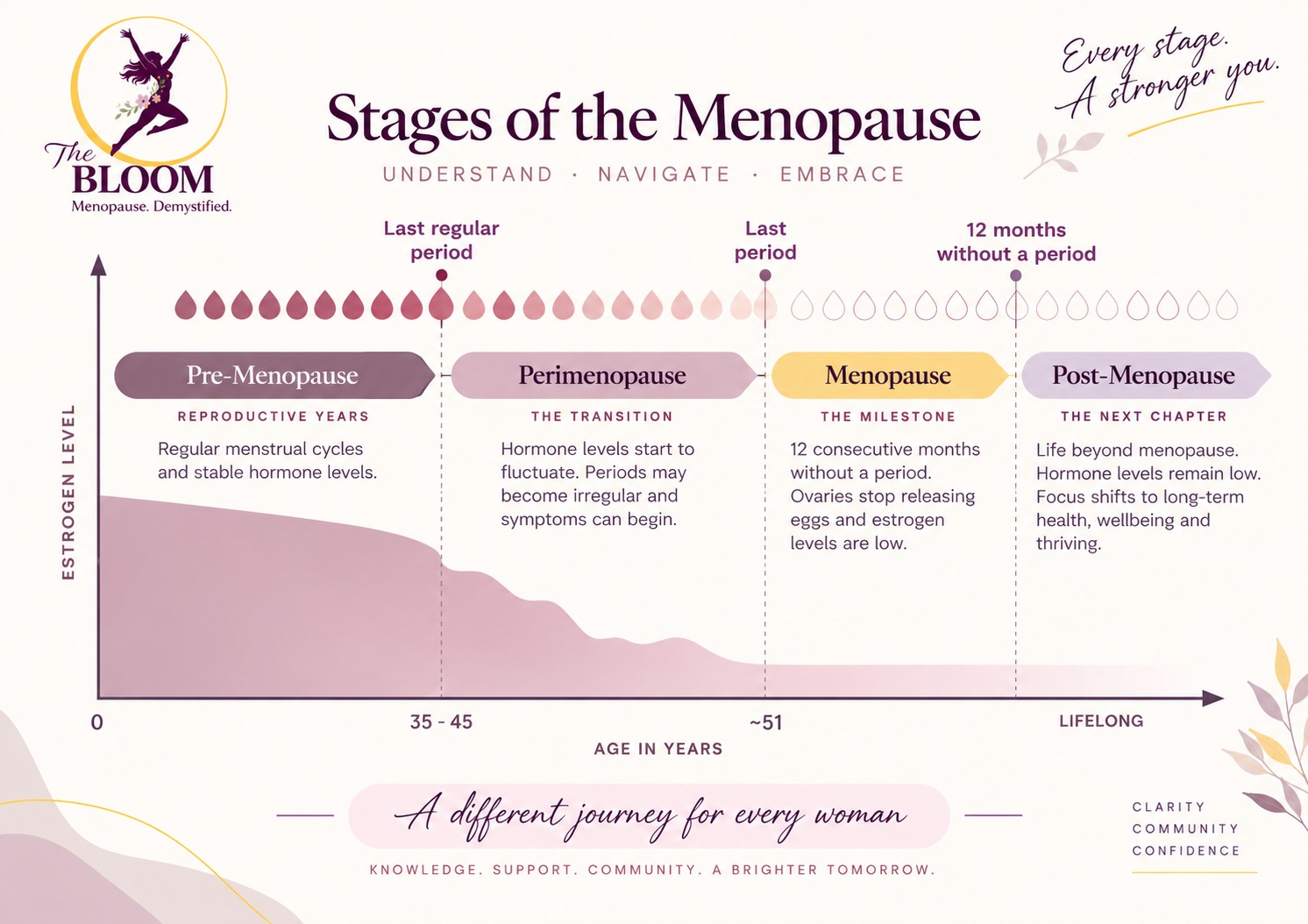
Perimenopause (peri, Greek for “around” or “near” + menopause)
is the transitional period leading to menopause, during which a women’s body undergoes hormonal changes. It typically starts in the 40’s but can begin earlier.
Perimenopause starts when the amount of oestrogen made by the ovaries begins to decline and extends until after your ovaries have stopped releasing eggs and you have your final period.
What are the signs of perimenopause?
You’re in your 40s, you wake up in a sweat at night, and your periods are erratic and often accompanied by heavy bleeding: Chances are, you’re going through perimenopause. Many women experience an array of symptoms as their hormones shift during the months or years leading up to menopause — that is, the natural end of menstruation.
How to manage perimenopause symptoms?
You need to be aware of what they are. We’re all different, and so are the effects that menopause has on our bodies. Because of that – and if the symptoms of the perimenopause are affecting your quality of life – we always recommend you seek the advice of a healthcare professional to discuss options tailored to your unique symptoms.
The word ‘menopause’ comes from ‘meno’, meaning your menstrual cycle, and ‘pause’, meaning to stop. The medical definition of menopause is when you have not had your monthly period for at least 12 months.
However, menopause is commonly used as a catch-all term to encompass perimenopause and the symptoms that come from the changes in hormone levels, whether this comes naturally or through illness or treatment.
The average age of a person going through natural menopause is 51 years old, but it can happen at any time.If you’re younger than 45, it is called an early menopause.Before the age of 40, it is known as a premature menopause, or Premature Ovarian Insufficiency (POI).
By the age of 54, 80% of women will have stopped having periods.
Symptoms of the menopause are the same as those of the perimenopause. There are around 35 symptoms, with some that are more commonly experienced.
Please consult healthcare professional / gyanecologist and seek medical advice.
In postmenopause, symptoms of menopause may have eased or stopped entirely, but some women continue to have symptoms for longer. Once you are postmenopausal, your hormone levels will remain at a constant low level.
Postmenopause is considered the third and final stage of menopause. Staying on top of your wellness in this stage is important to remain healthy and manage your risk factors for osteoporosis and other conditions.
You may be at increased risk for the following conditions after menopause:
There can be an increased risk of some health conditions postmenopause, such as cardiovascular (heart) disease, osteoporosis (weak bones) and urinary tract infections (UTIs). So it is important to have a healthy diet and lifestyle, and to go for your regular cancer screenings such as cervical (smear test) and breast.